Nature and Accessibility
🟡 Promising / Emerging Evidence
It’s also important to acknowledge that access to nature is not equal for everyone.
Mobility limitations, sensory differences, chronic illness, transportation barriers, and the design of outdoor spaces can all influence whether spending time in nature is realistic.
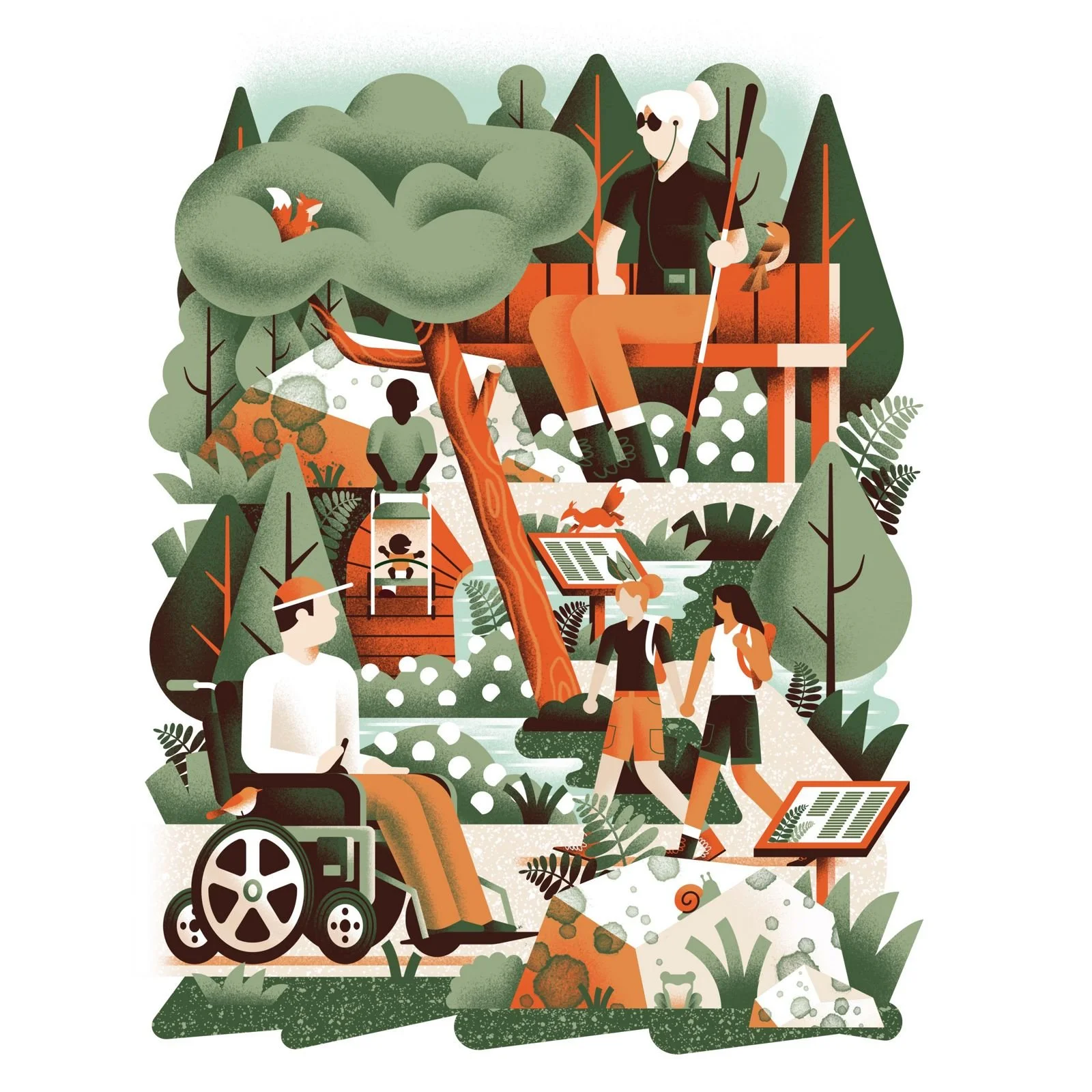
Research on accessible outdoor recreation suggests that when natural environments are intentionally designed to be inclusive, people with disabilities report many of the same benefits associated with nature exposure — including stress reduction, improved mood, and increased feelings of connection.
In other words: the benefits of nature are not limited to people who can hike long distances or navigate uneven trails.
Access matters.
What Accessible Nature Can Look Like
Nature experiences do not need to involve remote forests or strenuous activity.
Accessible nature experiences may include:
• Paved or wheelchair-accessible trails
• Botanical gardens or arboretums
• Parks with accessible paths and seating
• Sensory gardens designed for multiple senses
• Outdoor spaces designed with universal design principles
• Simply spending time near trees, water, or natural light
For some individuals, the most meaningful interaction with nature might be sitting outdoors and noticing the environment for a few minutes.
That counts.
Accessible Nature Programs
Some nature centers and outdoor organizations actively design programs so people with different abilities can participate.
For example, Tenafly Nature Center accessibility information describes how many programs are held on accessible surfaces for visitors with mobility challenges, and staff can adapt programs for participants with different abilities when given advance notice.
This approach reflects a growing emphasis in outdoor education on inclusive design and adaptable programming, allowing more people to participate in nature-based experiences.
Accessible programs may include:
• Activities held on accessible paths or surfaces
• Adapted educational programs
• Staff support for participants with different mobility or sensory needs
• Flexible program design to accommodate a range of abilities
These types of adaptations help make nature experiences possible for more people.